The Transistor
The vacuum tube was the computer's first electronic switch — but it was big, hot, fragile, and hungry for power. In December 1947, three physicists at Bell Laboratories in New Jersey showed a tiny sliver of germanium that could do the same job better. The transistor was the most important invention of the twentieth century — and the foundation of every computer since.
In short
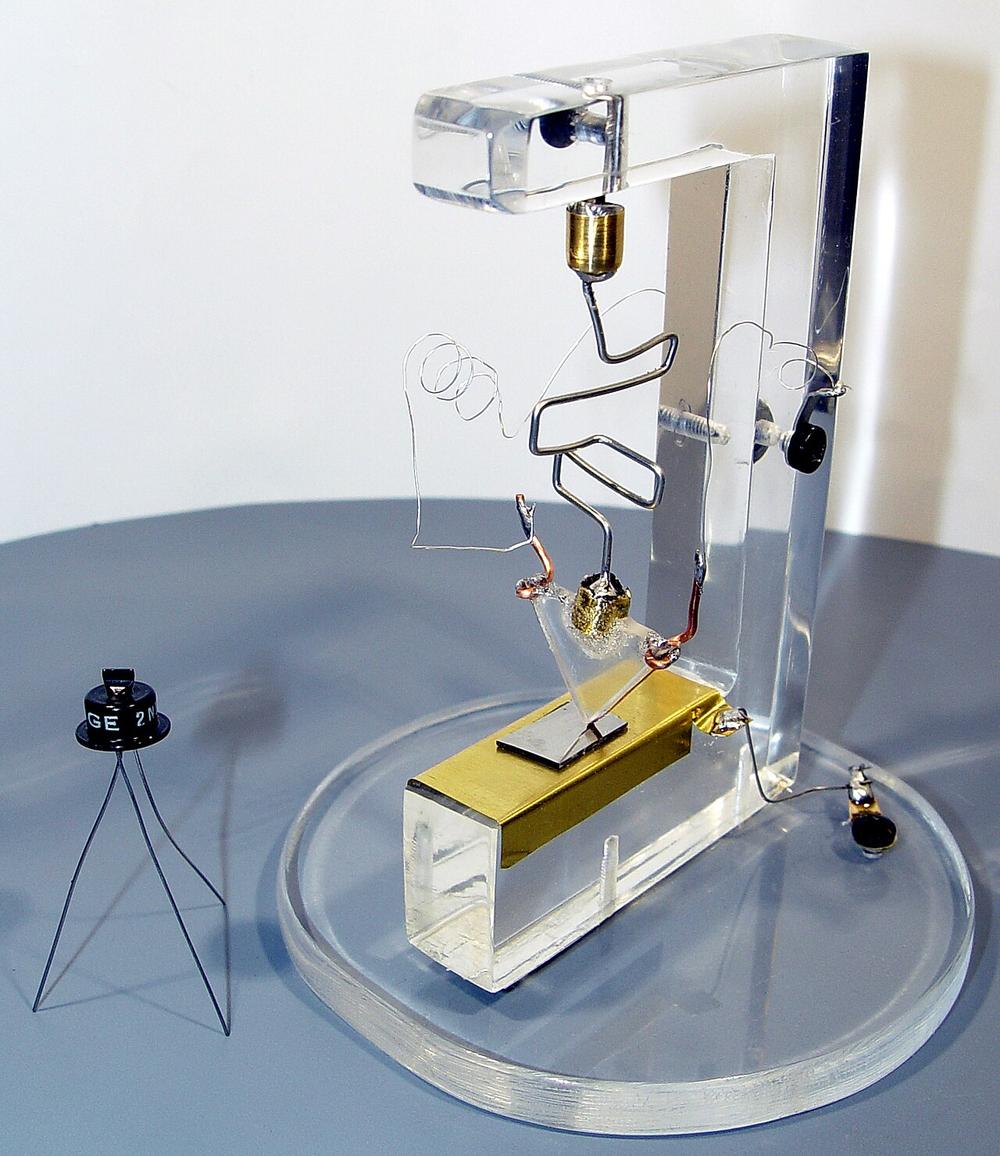
The first working transistor was demonstrated on 23 December 1947 at Bell Laboratories in Murray Hill, New Jersey, by John Bardeen and Walter Brattain, working under William Shockley. The point-contact transistor, a small piece of germanium with gold contacts, could amplify a signal and switch current on and off — the two jobs a computer needs. The three men shared the 1956 Nobel Prize in Physics for the invention.
The problem with vacuum tubes
ENIAC's 18,000 vacuum tubes were its weakness. Each tube was a glass bulb the size of a small light bulb, it ran hot, it burned out often, and together they drank enormous amounts of power. A computer built of tubes could never be small, cheap, or reliable enough for ordinary use. Telephone engineers at Bell Labs had the same problem in a different form: long-distance calls needed amplifiers, and tube amplifiers were bulky and unreliable. In 1945, William Shockley set his team the task of finding a solid-state replacement — a switch made of solid material, with no glass, no vacuum, and no filament to burn out.
December 1947: the miracle month
The breakthrough came in the "miracle month" between mid-November and late December 1947. John Bardeen, a theorist, worked out why Shockley's earlier designs failed: electrons were getting trapped at the surface of the semiconductor. Walter Brattain, an experimental physicist, found a way around the trap. On 16 December 1947, Bardeen and Brattain pressed two gold contacts onto a sliver of germanium and found the signal coming out nearly a hundred times stronger than the signal going in. A week later, on 23 December, they demonstrated the device to Bell Labs executives — Shockley called it a "magnificent Christmas present." The name "transistor," a blend of "transfer" and "resistor," was coined in May 1948, and Bell Labs announced the invention publicly in June 1948.
Why it changed everything
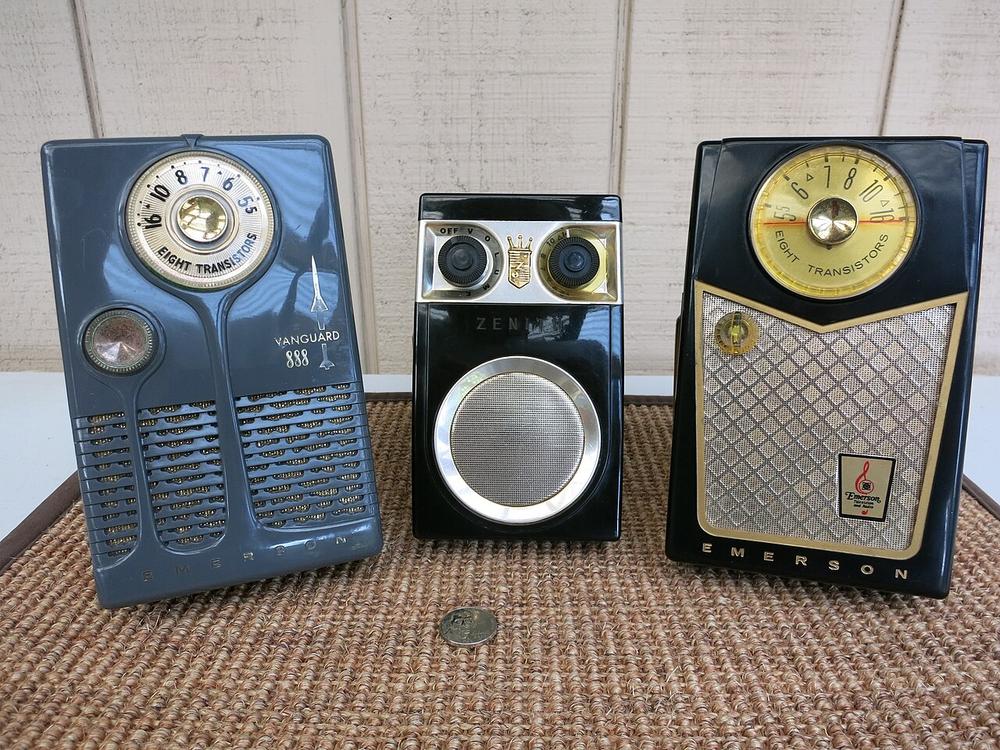
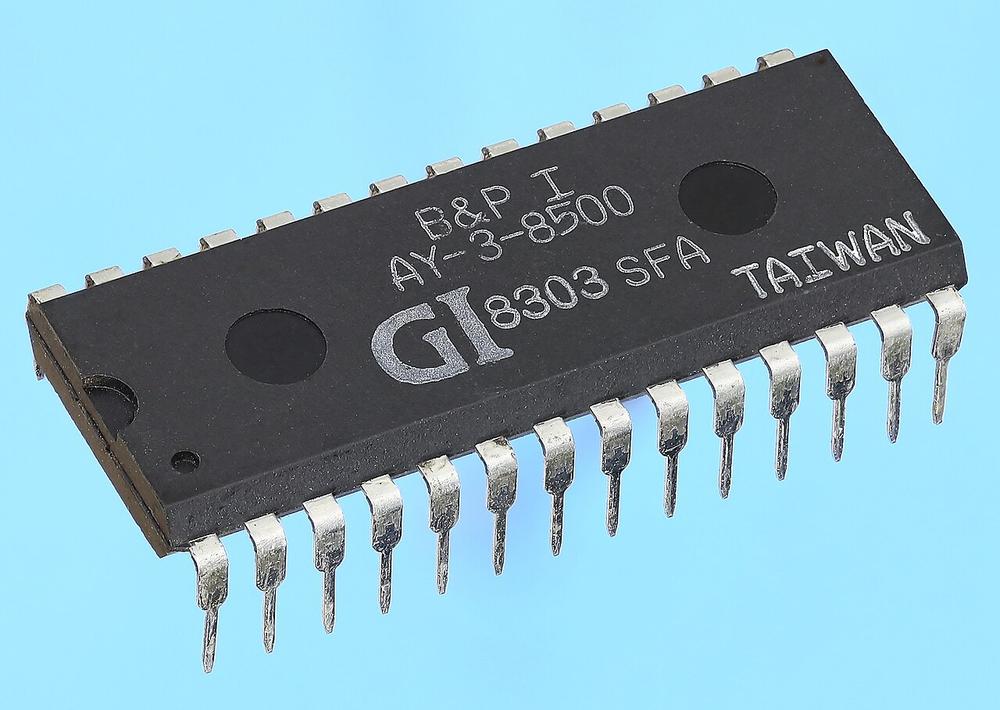
A transistor does two things a computer needs: it amplifies a signal, and it switches current on or off — a perfect match for binary ones and zeros. Unlike a tube, it is small, cool, rugged, and uses little power. At first transistors were used in hearing aids and radios — the first transistor radio, the Regency TR-1, appeared in 1954 — but engineers soon saw they could replace tubes in computers too. The first transistor computers appeared in the late 1950s, and they were smaller, faster, and far more reliable than tube machines. In 1958–59 Jack Kilby at Texas Instruments and Robert Noyce at Fairchild Semiconductor went one step further and put several transistors on a single chip: the integrated circuit.
From one transistor to billions
In 1965, Gordon Moore of Fairchild observed that the number of transistors on a chip was roughly doubling every year, later revised to about every two years — an observation that became known as Moore's Law. It held for more than fifty years. A modern phone chip holds tens of billions of transistors, each far smaller than a virus. Every one of them is a descendant of that germanium sliver demonstrated in New Jersey in December 1947.
Sources: History of the transistor — Wikipedia, Transistor: Innovation at Bell Labs — Britannica, Bell Telephone Laboratories — American Physical Society Checked 27 November 2026.