Charles Babbage and Ada Lovelace
In the 1830s, an English inventor sketched a machine that could do any calculation, follow instructions, and even change its own course mid-calculation. It was never built in his lifetime. But his friend Ada Lovelace understood it better than anyone, and in 1843 she published the first program ever written for a general-purpose computer — a century before the first working one existed.
In short
Charles Babbage designed the Analytical Engine in the 1830s: the first design for a general-purpose, programmable computer, with a memory (the Store) and a processor (the Mill), programmed by punched cards. It was never built. Ada Lovelace translated an account of it in 1843 and added notes — including Note G, a worked program to calculate Bernoulli numbers, widely described as the first published computer program.
The Difference Engine: a calculator that never made mistakes
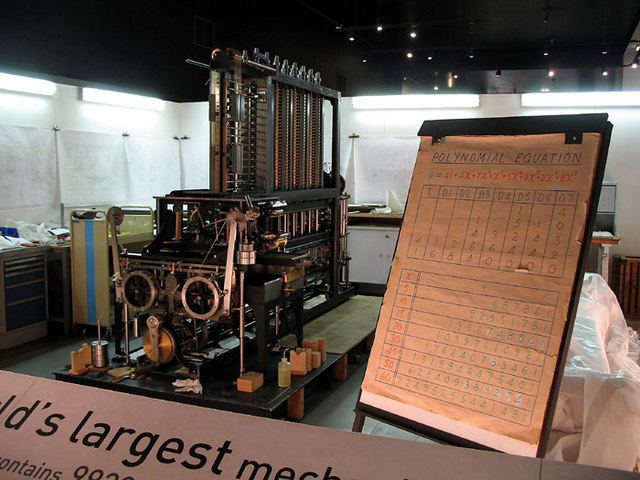
Babbage's first machine, the Difference Engine, was a mechanical calculator designed in the 1820s to print mathematical tables — the navigation and astronomy tables that sailors and scientists depended on. Hand-calculated tables were full of errors, and Babbage wanted a machine that would compute and print them without human mistakes. The British government funded it, but the project ran over budget, the engineering was harder than anyone expected, and only a working section was ever finished in Babbage's lifetime. A full Difference Engine No. 2 was finally built from his drawings by the Science Museum in London in 1991, and it worked exactly as designed.
The Analytical Engine: a computer on paper
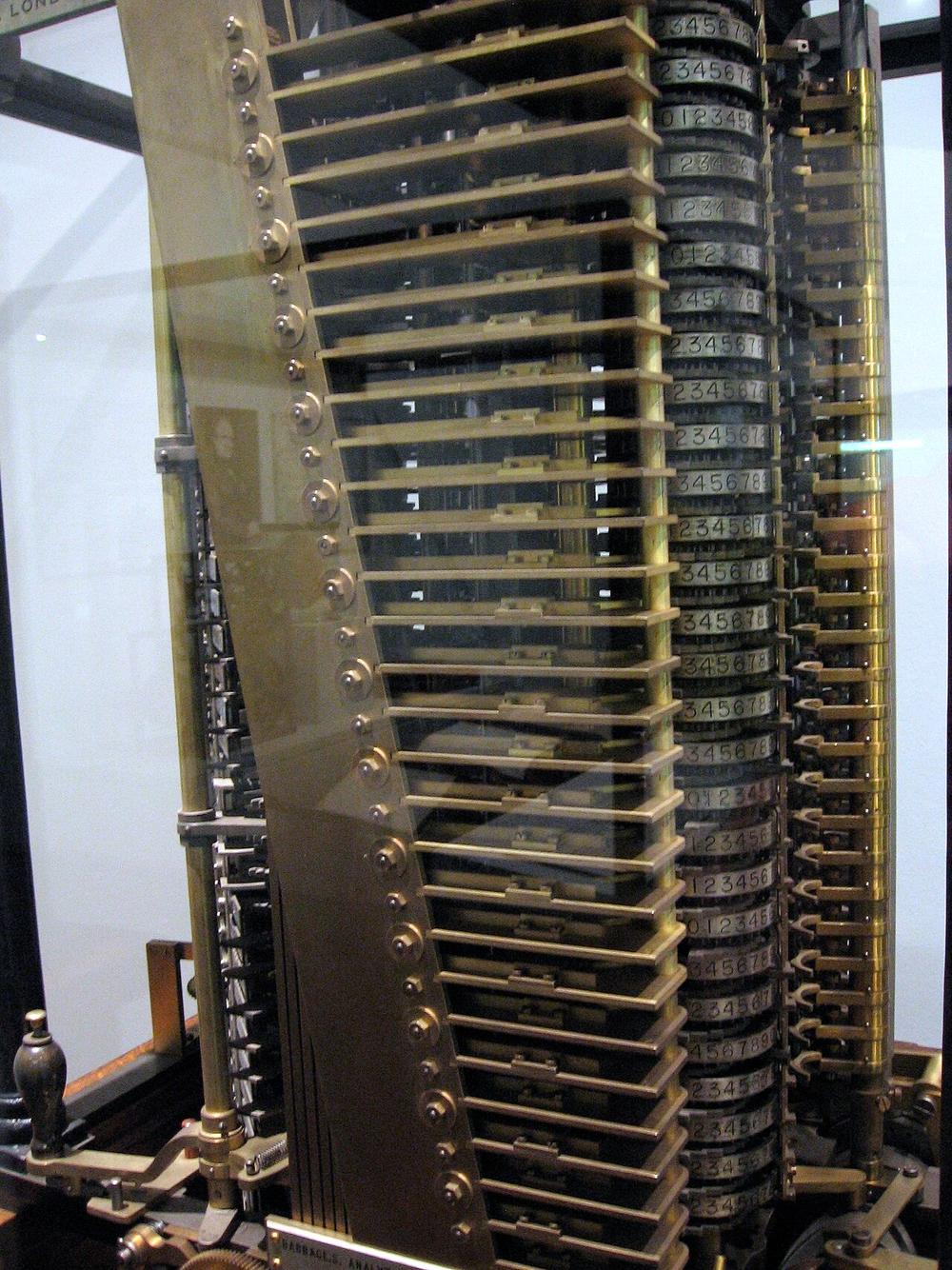
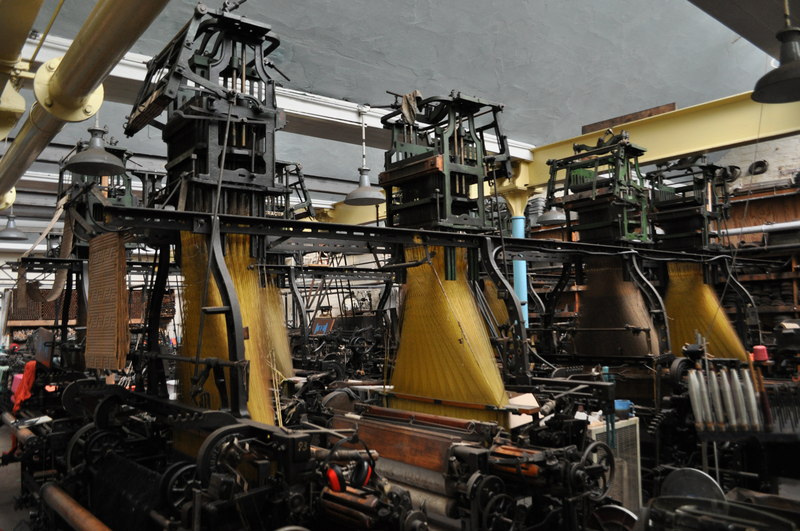
By 1834 Babbage had moved on to a far grander idea: the Analytical Engine, a machine that could do any calculation, not just one fixed kind. It had a memory, which he called the Store, holding a thousand numbers; a processor, the Mill, to do the arithmetic; punched cards, borrowed from Jacquard's weaving looms, to carry the instructions; and the ability to test a result and branch — to jump forward or back through the cards depending on the answer. Those four features — memory, processor, stored instructions, and branching — are the skeleton of every computer today. The machine was never built: it needed thousands of precision gears, and Victorian engineering could not make them cheaply enough.
Ada Lovelace and Note G
Ada Lovelace, the daughter of the poet Lord Byron, met Babbage in 1833 and became the Analytical Engine's most perceptive champion. In 1843 she translated a French paper about the Engine by the Italian engineer Luigi Menabrea and added notes of her own that ran to three times the length of the original. The most famous, Note G, worked out step by step how the Engine would calculate the Bernoulli numbers — a sequence from number theory. It is a table of operations, fetched from the Store, computed in the Mill, and written back: a program in all but syntax. Historians debate the label "first programmer" — Babbage had written small programs in his notebooks in 1836–37 — but Note G is the first published program for a general-purpose machine, and Lovelace also saw further than Babbage: she wrote that such a machine could one day compose music and make art, not just crunch numbers.
Why they matter
Babbage and Lovelace were a hundred years early. Their ideas were forgotten for decades and only rediscovered when electronic computers were being built in the 1940s. But the concepts they set down — a stored program, a separate memory and processor, conditional branching, and the idea that a computer could handle symbols as well as numbers — are the foundation of the whole story that follows.
Sources: Analytical Engine — Wikipedia, Ada Lovelace — Wikipedia, Charles Babbage — Wikipedia, Computer History Museum timeline Checked 27 November 2026.