ENIAC and the First Electronic Computers
In a basement room at the University of Pennsylvania sat a machine the size of a small house: 30 tons of vacuum tubes, wires, and switches that could do in seconds what took rooms full of human calculators days. ENIAC was the first programmable, electronic, general-purpose computer — and it proved that electronics, not gears, were the future of computing.
In short
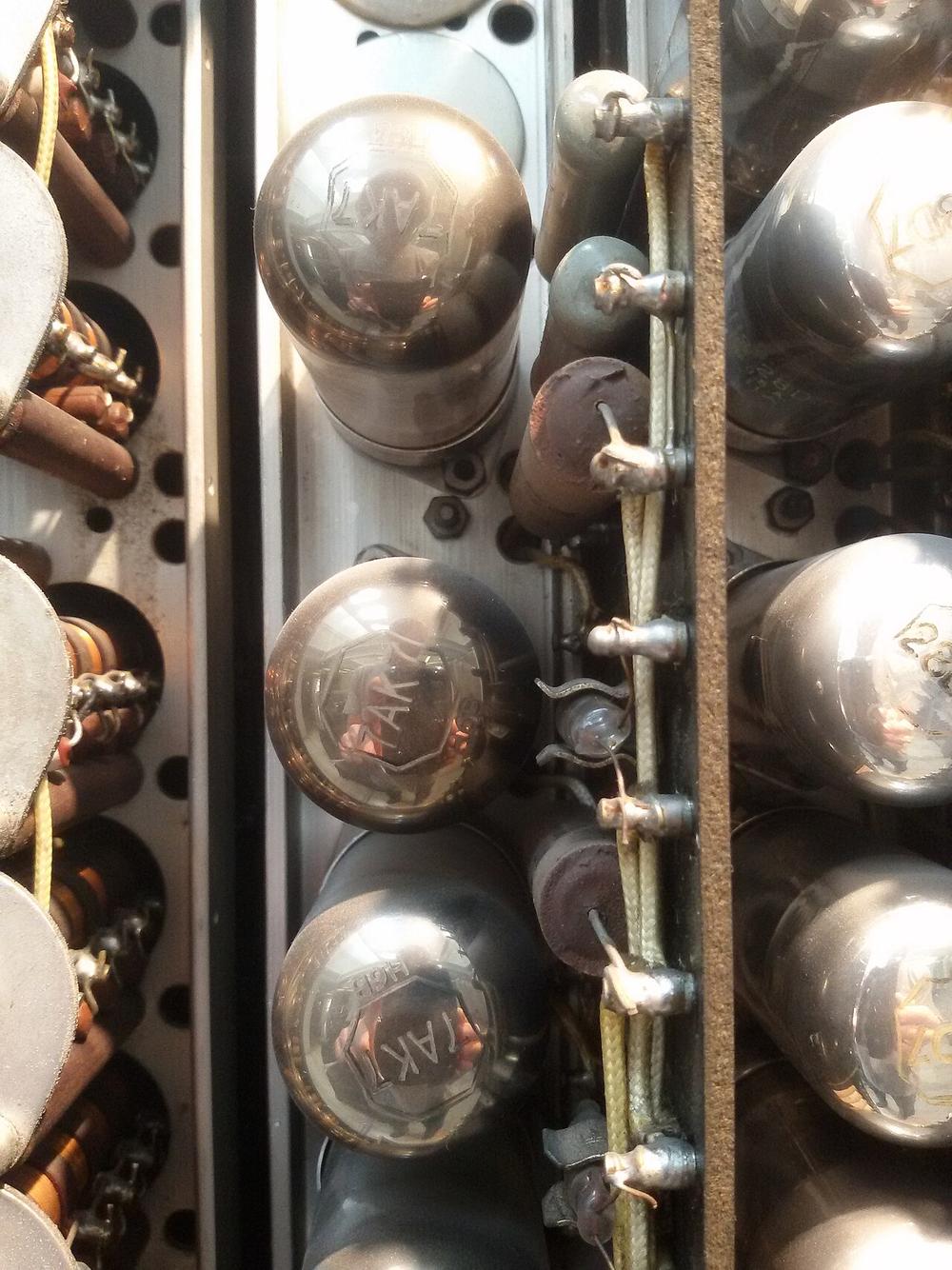
ENIAC (Electronic Numerical Integrator and Computer) was completed in 1945 at the University of Pennsylvania and dedicated on 15 February 1946. It was the first programmable, electronic, general-purpose digital computer, built to calculate artillery firing tables for the US Army. It used about 18,000 vacuum tubes, weighed about 30 tons, and could do roughly 5,000 additions a second — about a thousand times faster than the electromechanical machines before it.
Why the Army needed it
During the Second World War, the US Army needed firing tables for every gun, shell, and weather condition — thousands of trajectories, each requiring days of calculation by hand. Teams of human "computers," many of them women mathematicians, did the work with desk calculators. In 1943 the Army funded John Mauchly and J. Presper Eckert at the University of Pennsylvania's Moore School of Electrical Engineering to build an electronic machine to do it. The contract was signed on 5 June 1943, construction began in secret, and the machine was complete by the end of 1945 — too late for the war, but in time to change everything after it.
A room full of tubes
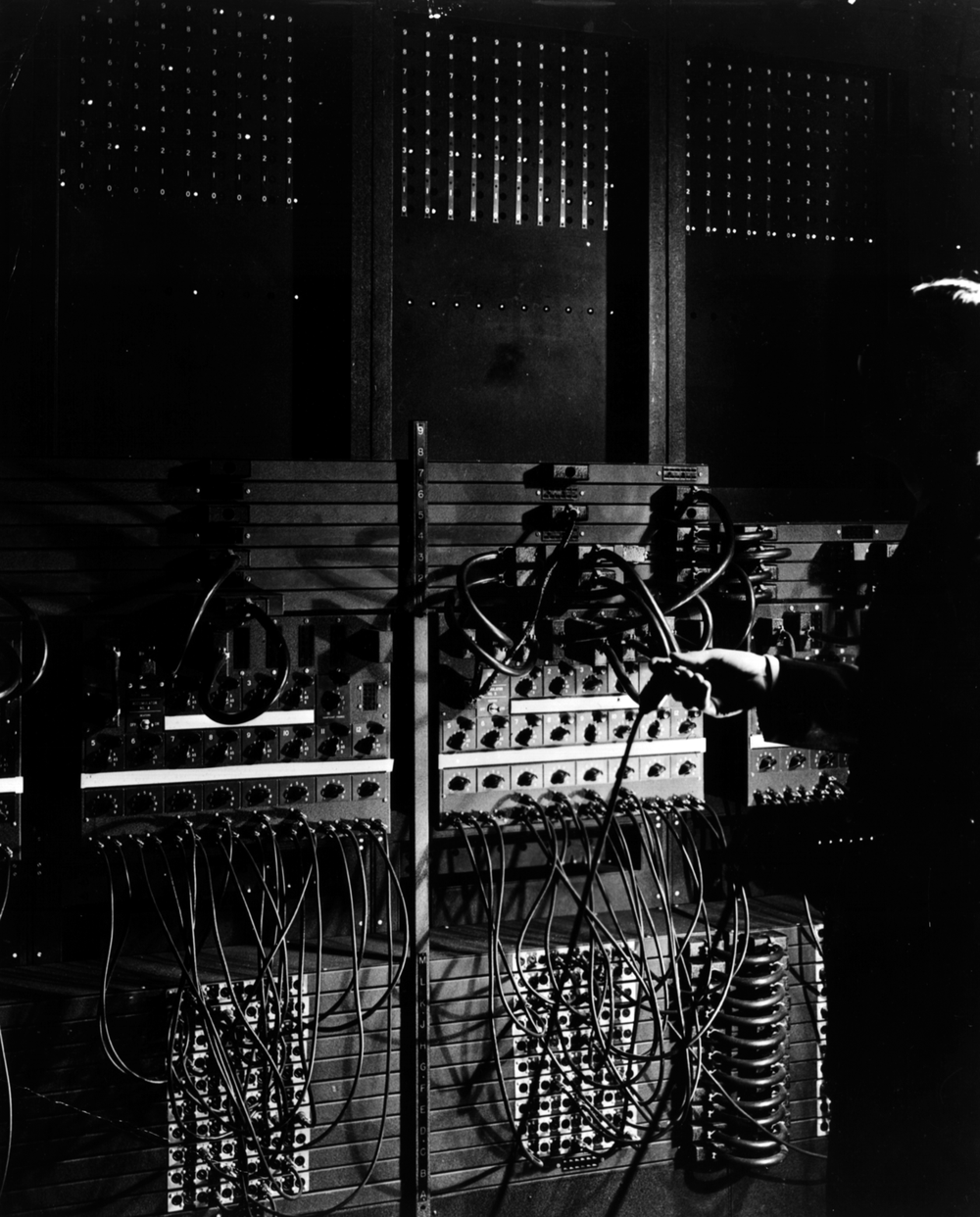
ENIAC filled a 1,500-square-foot room with forty panels of switches, dials, and blinking lights. It had about 18,000 vacuum tubes, weighed around 30 tons, and consumed about 150 kilowatts of electricity. It could add 5,000 numbers a second and multiply in milliseconds — roughly a thousand times faster than the electromechanical machines of the day. Its first practical job, on 10 December 1945, was calculations for the hydrogen bomb at Los Alamos. It was formally dedicated on 15 February 1946, and the press hailed it as a "giant brain."
Programming by hand — and the women who did it
ENIAC had no stored program at first: to set it a new problem, operators physically rewired it, plugging cables and setting thousands of switches — a job that could take days. Six women — Kathleen McNulty, Jean Jennings, Frances Snyder, Marlyn Wescoff, Frances Bilas, and Ruth Lichterman — were the first ENIAC programmers. They worked out how to program the machine and ran its first public demonstration in 1946, yet they were not invited to the formal dedication dinner and their work went unrecognised for decades. Today they are celebrated as pioneers of programming.
What came next
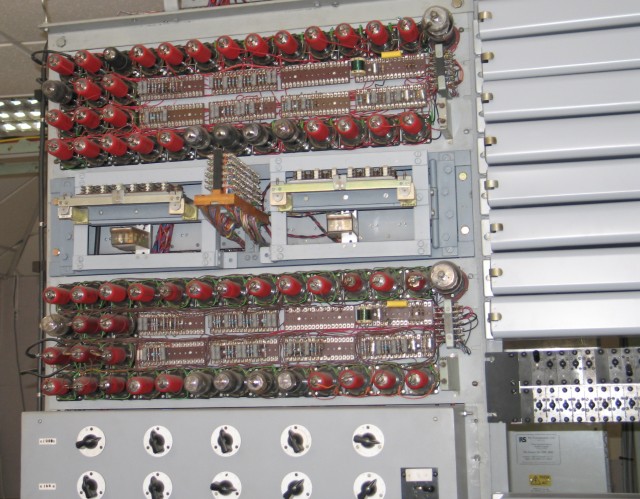
ENIAC was not the only early electronic computer. Britain's Colossus, built in secret at Bletchley Park in 1943, used electronics to break German codes but was a special-purpose machine. The Manchester Baby of 1948 was the first machine to run a program stored in electronic memory, and the EDSAC at Cambridge in 1949 was the first practical stored-program computer. But ENIAC was the proof that a general-purpose electronic computer could work at scale — and the transistor, invented two years later, would shrink it from a room to a desk, then to a pocket.
Sources: ENIAC — Wikipedia, The Brief History of the ENIAC Computer — Smithsonian Magazine, ENIAC — Penn Engineering, ENIAC women programmers — Wikipedia Checked 27 November 2026.