Apple and Microsoft
Two companies founded within a year of each other, by young men in their twenties, came to define personal computing. Apple built beautiful, closed machines and the graphical interface everyone now takes for granted. Microsoft built the software that ran on everyone else's machines. Their rivalry — and their occasional partnership — shaped the computer on your desk.
In short
Apple was founded in 1976 by Steve Jobs and Steve Wozniak, whose Apple I sold as a bare circuit board for $666.66 and whose Apple II (1977) was the first consumer-friendly PC. Microsoft was founded in 1975 by Bill Gates and Paul Allen to sell BASIC for the Altair; its MS-DOS powered the IBM PC from 1981, and Windows, first released in 1985, brought the graphical interface to the mass market.
Two garages, two philosophies
Apple Computer was founded on 1 April 1976 by Steve Jobs and Steve Wozniak. Wozniak designed the Apple I, a single-board computer sold for $666.66 as a bare circuit that buyers had to finish themselves; only about 200 were built. The Apple II of 1977 was the real product: finished, friendly, and expandable. Microsoft was founded in 1975 in Albuquerque, New Mexico, by Bill Gates and Paul Allen, whose first product was a BASIC interpreter for the Altair 8800. The two companies embodied opposite ideas: Apple believed in controlling the whole machine — hardware and software together — while Microsoft believed in selling software that ran on anyone's hardware.
The Macintosh and the graphical interface
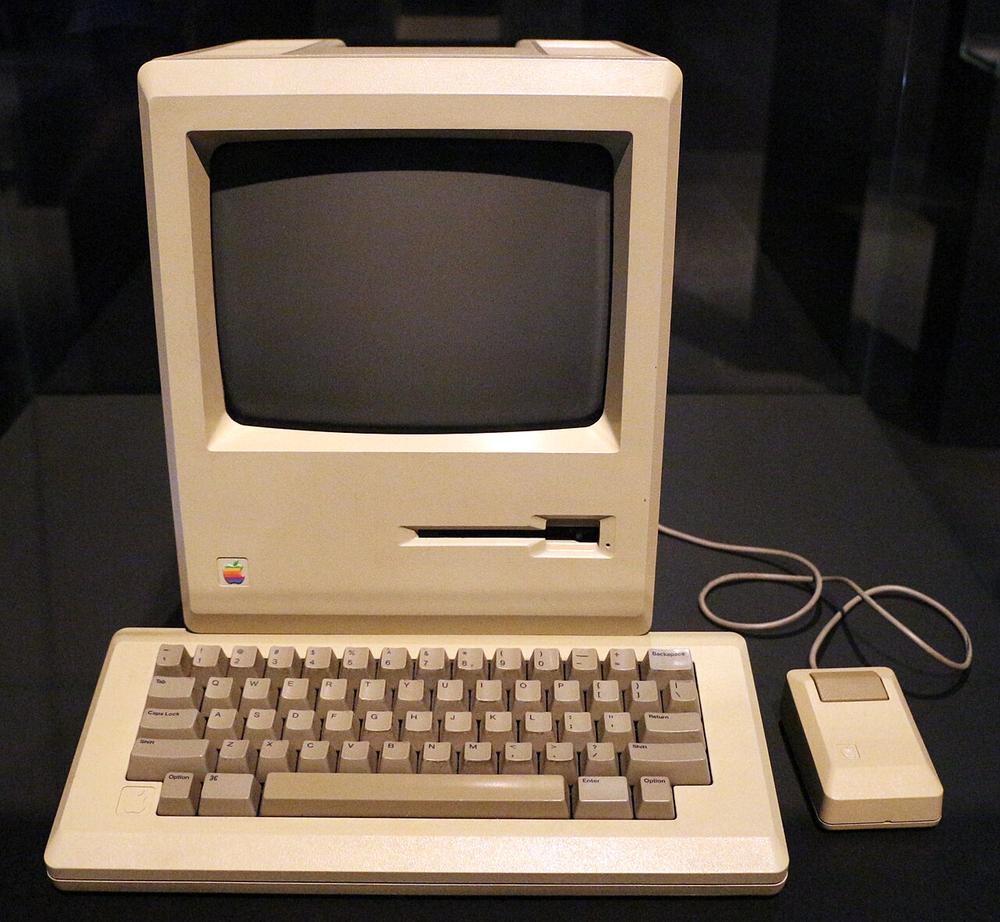
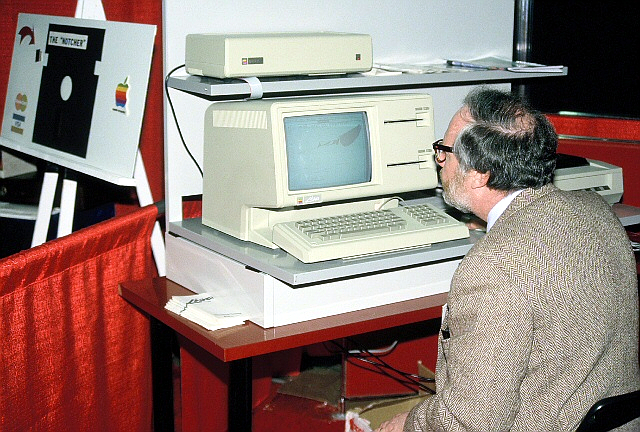
The most important idea of the 1980s was the graphical user interface: windows, icons, menus, and a mouse pointer instead of typed commands. It was invented at Xerox's Palo Alto Research Center (PARC), where researchers built the Alto computer in the 1970s. Apple licensed the ideas and launched the Lisa in 1983, then the Macintosh on 24 January 1984 — famously introduced in a Super Bowl television advertisement. The Mac was the first successful mass-market computer with a mouse and graphical interface. Microsoft, which had been writing software for the Mac, announced its own graphical system, Windows, in 1983 and released Windows 1.0 in November 1985.
The Windows decade
Microsoft's great advantage was the IBM PC standard: MS-DOS ran on millions of compatible machines, and Windows rode on top of it. Windows 3.0 (1990) and Windows 95 (1995) made the graphical interface the default for office and home computers worldwide, and Microsoft Office — Word and Excel — became the standard tools of office work. Apple, meanwhile, struggled: Jobs left the company in 1985, the Mac remained a niche product, and by 1997 Apple was close to collapse. Jobs returned that year, and the 1998 iMac — a colourful, friendly, all-in-one machine — began the comeback that would later produce the iPod, the iPhone, and the iPad.
Why the rivalry mattered
Apple and Microsoft fought in court and in the marketplace for decades, but they also needed each other: Microsoft's Office ran on the Mac, and Apple's success pushed Microsoft to improve Windows. Between them they settled the shape of personal computing: a graphical interface, a mouse, windows and icons, and software sold separately from hardware. That shape lasted until the phone replaced the PC as the computer most people use most — a shift both companies would chase in the next chapter.
Sources: Apple Inc. — Wikipedia, Microsoft — Wikipedia, Macintosh — Wikipedia, Microsoft Windows — Wikipedia Checked 27 November 2026.